

Buying Gold? The Answer Might Surprise You.
Published by Shanthi Gold House | Reading time: 7 minutes
Article
- Author: Shanthi Gold House Editorial Team, in consultation with master jeweller Sudarakan Jothirajan
- Topics: Buy gold jewellery Chennai, online gold jewellery India, gold hallmarking India 2025
Quick Answer (For Those in a Hurry)
Yes — for most Indian buyers, walking into a trusted jewellery store in Chennai is still significantly better than buying gold online.
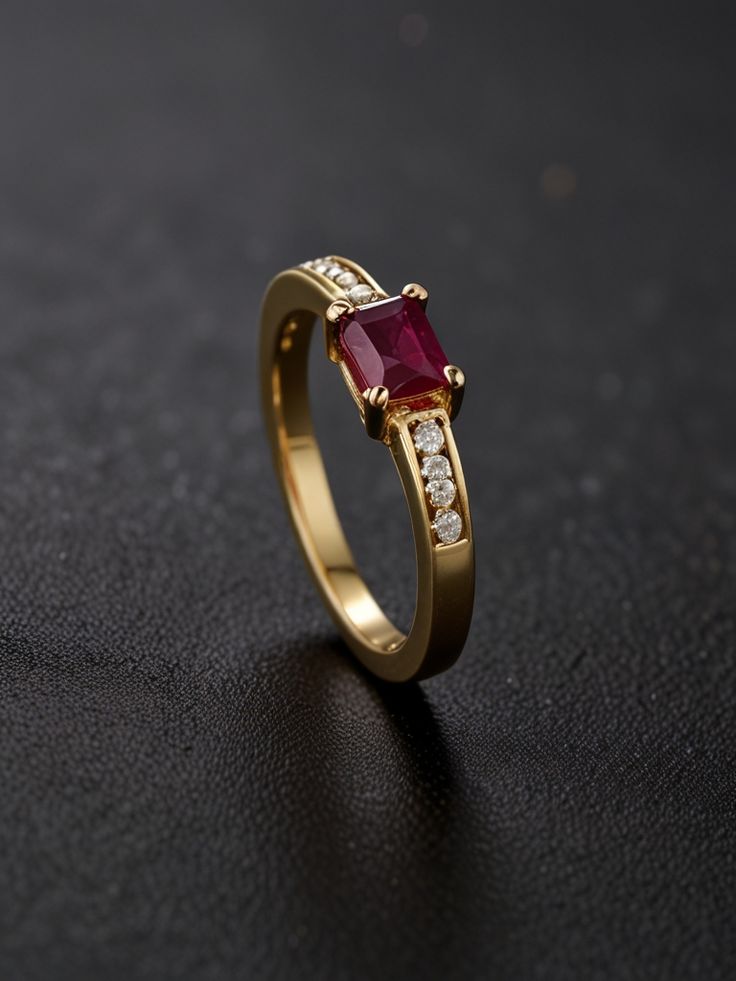
Not because online platforms are dishonest. But because gold is one of the few purchases where what you see on a screen and what you hold in your hand are almost never the same thing. Weight, finish, stone quality, clasps, and the actual wearability of a piece — none of these translate through a photograph.
Add to that the hidden costs of online gold (making charges buried in the price, return logistics nightmares, and platform fees disguised as discounts), and the case for buying in person from a reputed jeweller becomes even stronger.
Here is the full breakdown.

The Online Gold Boom: What’s Really Going On
Between 2020 and 2024, India saw a significant surge in online gold jewellery purchases. Platforms like Tanishq’s e-store, Caratlane, Melorra, and Bluestone grew aggressively. Convenience was the pitch: browse from your sofa, get it delivered to your door, easy returns.
And for a certain kind of buyer — someone looking for lightweight, machine-made fashion jewellery for everyday office wear — these platforms work reasonably well.
But for the kind of gold most Indian families actually care about — bridal sets, traditional temple jewellery, customised pieces, heavy necklaces for special occasions, or jewellery that will be passed down to the next generation — online platforms have real, structural limitations that no free shipping offer can fix.
The Hidden Costs of Online Gold Jewellery
This is the part that most shoppers discover only after they’ve placed their order.
Making charges are baked into the “discount.” Online platforms frequently advertise attractive discounts — “20% off making charges!” But the base making charge they start from is often inflated. A traditional neighbourhood jeweller in Chennai typically charges 8–12% making charges on standard designs. Some online platforms start at 18–25% before the discount, meaning you’re paying more even after the offer.
Return policies sound generous until you need them. Most platforms offer 30-day returns, but the fine print often excludes customised pieces, sized rings, and anything altered post-delivery. Shipping heavy gold jewellery back involves insurance costs, courier risks, and waiting periods that can stretch to weeks.
GST and delivery charges are added at checkout. The price you see on the product page is rarely the price you pay. GST at 3% on gold jewellery, plus platform convenience fees and delivery insurance charges, can add ₹500–₹2,000 to smaller purchases.
You cannot negotiate. At a reputed Chennai jeweller, a long-standing customer — or even a first-time visitor who does their homework — can have a conversation about making charges, old gold exchange rates, and scheme discounts. Online, the price is the price.
“Online gold works for fashion pieces. For anything that matters — a mangalsutra, a bridal necklace, a child’s first gold set — you need to hold it, feel its weight, see how it sits. No screen can give you that.” — Sudarakan Jothirajan, Proprietor, Shanthi Gold House
What BIS Hallmarking Means — and Why It’s Easier to Verify In Person
Since September 2021, the Bureau of Indian Standards (BIS) made hallmarking mandatory for gold jewellery sold in India. Every hallmarked piece must carry four marks:
- The BIS logo (a triangle)
- The purity grade (916 for 22KT, 750 for 18KT, 585 for 14KT)
- The Hallmarking Unique ID (HUID) — a 6-character alphanumeric code
- The jeweller’s identification mark
You can verify any HUID on the BIS Care app or website. This takes about 30 seconds and tells you exactly which jeweller made the piece, when it was hallmarked, and the purity certification.
The problem with online purchases: You are relying entirely on a photograph of the hallmark. The image may be blurry, cropped, or of a different piece altogether. In a store, you hold the actual piece, read the actual stamp, and verify it on your phone before you pay. That is a fundamentally more secure transaction.
At Shanthi Gold House, every piece of jewellery carries BIS hallmarking. Customers are encouraged to verify their purchase using the HUID code before leaving the store — a practice that Sudarakan Jothirajan has made standard across four decades of business.
Why Chennai’s Gold Market Is One of India’s Most Competitive
Chennai has one of the most price-competitive gold markets in India. Here’s why that matters for buyers:
High volume, tight margins. Chennai jewellers — particularly those serving the local Tamil and Sri Lankan Tamil communities — operate on thin margins and high trust. Repeat business and word-of-mouth referrals are everything. This keeps prices honest and quality high.
Proximity to the manufacturing hub. Tamil Nadu is home to a large concentration of gold jewellery craftsmen, particularly for traditional South Indian designs like temple jewellery, vanki (armlet), maatal (hair ornament), and oddiyanam (waist belt). Buying from a Chennai jeweller often means you are closer to the source.
Strong cultural knowledge. A jeweller in Chennai who has been serving the community for decades understands what a bride’s family needs, what weight is appropriate for different ceremonies, what designs hold their resale value, and how to guide a first-time buyer. That expertise does not exist on a product page.
Competition keeps making charges in check. Because there are many reputed jewellers in Chennai competing for the same customers, making charges are generally lower and more negotiable than in smaller cities or on national online platforms.
When Does Online Gold Actually Make Sense?
To be fair, there are genuine use cases where online gold platforms serve buyers well:
Lightweight daily-wear pieces under ₹15,000. For small earrings, thin chains, or minimalist rings intended for everyday office or college wear, online platforms offer variety and convenience that a single store cannot match.
When you live outside India. For NRI customers or members of the Tamil diaspora in Singapore, the UAE, or the UK who want to send a gift to family in Chennai, ordering online and choosing in-store pickup or local delivery is a practical option.
Comparing designs before visiting a store. Many smart buyers use online catalogues as inspiration before visiting a jeweller. They browse, shortlist designs they like, and then go in-store to find something similar — or ask the jeweller to recreate a design.
Digital gold for pure investment purposes. If you are purely accumulating gold as a financial asset and have no intention of wearing it, digital gold or Gold ETFs are fine. But the moment you want to wear it, gift it, or pass it down, physical always wins.
The Shanthi Gold House Difference: 40 Years and Two Countries
When Sudarakan Jothirajan talks about what separates a trusted neighbourhood jeweller from an online platform, he points to something that cannot be digitised: accountability.
“When a customer comes back after five years to show me the necklace she bought for her wedding, still shining, still holding its clasp — that is what I am proud of. An app does not feel that.”
Shanthi Gold House has been serving customers in Chennai and Sri Lanka for over 40 years. Their customer base includes multiple generations of the same families — grandmothers who bought their first gold set there, whose granddaughters are now planning their own bridal jewellery.
This kind of continuity is built on:
- Consistent quality — every piece BIS hallmarked and purity-verified
- Transparent pricing — making charges clearly communicated before purchase
- Flexible schemes — monthly gold and silver savings plans for every budget
- Personalised guidance — Sudarakan Jothirajan and his team are available in-store or via WhatsApp at +91-9444302807 for consultations before you visit
You can also browse their collection and reach out via www.shanthigoldhouse.com or email sghchennai@gmail.com.
A Practical Buying Checklist: Whether You Buy Online or In-Store
Before any gold purchase — wherever you make it — run through this list:
Verify hallmarking. Check the HUID code on the BIS Care app. Takes 30 seconds. Non-negotiable.
Understand the making charges. Ask for the making charge percentage separately from the gold rate. Compare both.
Check the gold rate for the day. The Multi Commodity Exchange (MCX) publishes live gold rates. A reputed jeweller’s price will be very close to MCX spot rate, plus making charges and GST.
Ask about exchange value. If you ever want to sell back or exchange this piece, what rate will the jeweller offer? A trusted jeweller will be clear about their buyback policy upfront.
Get a proper invoice. The invoice should list the net gold weight, making charges, gold rate, HUID code, and GST separately. If any of these are missing, ask why.
Frequently Asked Questions
Q: Is it cheaper to buy gold jewellery online in India? A: Not necessarily. After accounting for inflated base making charges, GST, delivery insurance, and platform fees, online gold is often equal to or more expensive than buying from a competitive Chennai jeweller — with significantly less assurance on quality.
Q: How do I verify gold purity when buying in a store? A: Ask for the HUID (Hallmarking Unique ID) on the piece and verify it on the BIS Care app (available on Android and iOS). This will confirm the purity grade, certification date, and jeweller identity.
Q: Can I negotiate making charges at a jeweller in Chennai? A: Yes, particularly for larger purchases, repeat customers, or if you are part of a monthly savings scheme. Online platforms do not offer this flexibility.
Q: Is Caratlane or Tanishq better than a local jeweller? A: For machine-made lightweight fashion pieces, large branded chains offer good quality control. For traditional South Indian designs, bridal jewellery, or customised pieces, a specialist jeweller with deep cultural knowledge and physical presence will almost always serve you better.
Q: How do I contact Shanthi Gold House to see their collection before visiting? A: WhatsApp +91-9444302807 or visit www.shanthigoldhouse.com. You can also email sghchennai@gmail.com with your requirements and they will guide you before your visit.
Q: Does Shanthi Gold House sell online? A: Shanthi Gold House’s strength is in personalised, in-store service backed by four decades of expertise. Contact them directly to discuss what you are looking for — they serve customers across Chennai and the Sri Lankan Tamil community.
Q: What is the 916 stamp on gold jewellery? A: 916 indicates 22-karat gold, meaning the jewellery contains 91.6% pure gold. This is the most common purity for traditional Indian gold jewellery. It is more durable than 24KT and more valuable than 18KT.
The Bottom Line
Online gold has its place. But for anything that matters — anything you will wear on your wedding day, gift to your daughter, or keep as a family heirloom — there is no substitute for a jeweller who knows your name, knows your family, and has been doing this for longer than most online platforms have existed.
Chennai’s gold market, with its competitive pricing, hallmarking rigour, and deep craftsmanship tradition, remains one of the best places in India to buy gold jewellery. Find the right jeweller within it, and you have found something worth keeping.
Shanthi Gold House has been a trusted name in gold and silver jewellery for over 40 years, serving customers across Chennai and Sri Lanka. Visit www.shanthigoldhouse.com, WhatsApp +91-9444302807, or email sghchennai@gmail.com to explore their collection and savings schemes.